Look at the signal
Understand what biomarkers the test analyzes and what its published evidence can—and cannot—establish.

Multi-cancer screening guide
Both are prescription blood tests designed to look for signals associated with multiple cancers. Their analytical methods—and the detail provided in a positive result—are not the same.
Human Longevity offers Galleri. This educational comparison is based on manufacturer materials and is not a substitute for medical advice.
01Both use a single blood draw
02Both screen for signals across 50+ cancer types
03Both require a prescription
04Neither replaces routine screening
Cancerguard combines two biomarker classes: DNA methylation and proteins. Galleri analyzes methylation patterns in cell-free DNA and, when it detects a cancer signal, predicts the likely tissue or organ associated with that signal.
That does not make either test diagnostic. It does mean that result format and the plan for follow-up deserve as much attention as the number of cancer types a test screens for.
Side-by-side
Read this as a starting point for a clinician conversation—not a recommendation based on test specifications alone.
A practical review
Marketing headlines can make these tests sound interchangeable. A useful review looks beyond the category and asks how the information will support a real clinical next step.
Understand what biomarkers the test analyzes and what its published evidence can—and cannot—establish.
Ask whether a positive result provides direction about where a clinician may begin confirmatory evaluation.
Before testing, understand who will review the result and coordinate next steps if further evaluation is needed.
Multi-cancer testing supplements—not replaces—recommended screening and symptom-based medical evaluation.
For your clinician
Which test fits my age, personal history, and family history?
What happens if the result is positive or a cancer signal is detected?
How will the test help determine where follow-up should begin?
Which routine screenings should I continue—and when?
What will the full testing and follow-up process involve?
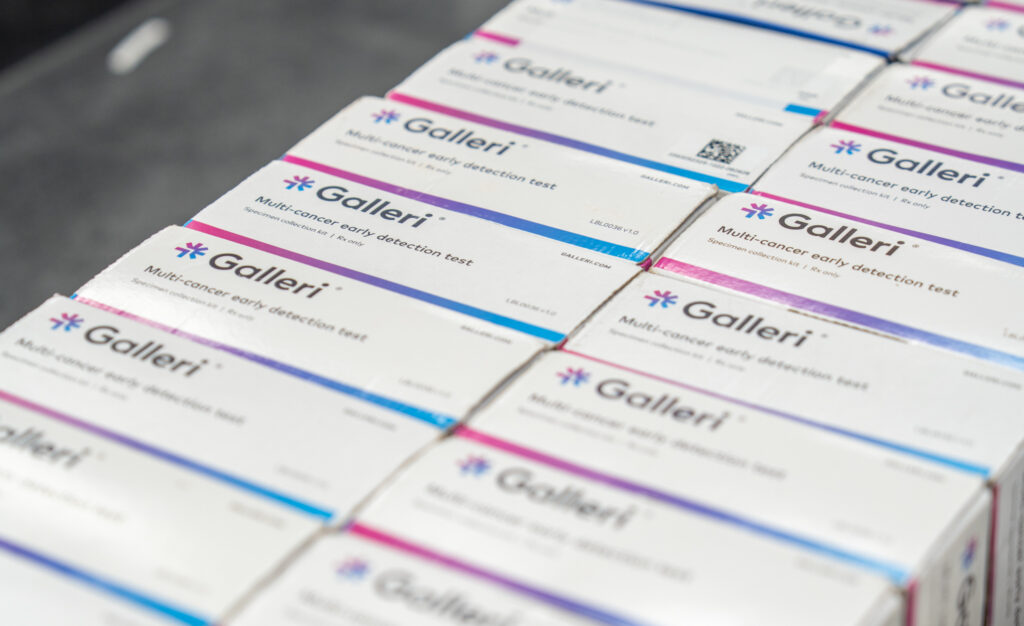
The Human Longevity pathway
Through Human Longevity, eligibility is reviewed before a physician order is placed. The process includes a scheduled blood draw and physician review of your result, with guidance on next steps.
Clear answers
There is no single answer for every person. The tests use different analytical approaches and report results differently. A clinician can help weigh those differences against your history, risk, and preferences.
No. These are screening tests, not diagnostic tests. A positive result or detected cancer signal requires follow-up with medically established diagnostic procedures.
No. False-negative results can occur, and neither test detects every cancer. Continue the routine screenings your healthcare provider recommends and discuss new or concerning symptoms with a clinician.
No. Both manufacturers state that their tests should be used in addition to recommended screening, not as a replacement for it.
Important context
Both Cancerguard and Galleri can produce false-positive and false-negative results. Neither detects all cancers, and a negative result does not rule out cancer. A positive result or detected signal requires confirmatory diagnostic evaluation. Continue routine screening recommended by your healthcare provider.
Galleri is not recommended for individuals who are pregnant, age 21 or younger, or undergoing active cancer treatment. Review each test's current intended-use information with a healthcare professional before deciding whether to test.
This review uses current manufacturer information. Product information and intended-use guidance can change.
.png)
Your next step
Learn how Galleri works through Human Longevity, what the process includes, and which limitations to discuss with a physician.